
Service +1-800-377-7661 Parts +1-800-377-1044 Find Service Center Book Demo
EN | ES | FR | DE | ZH

Epson Service Guidance for the Right Printer Path

Use our 60-second service finder, compare real application notes, or speak with an Epson application engineer before you commit capital. We review substrate, monthly duty cycle, white-ink needs, label media, RIP workflow, and the maintenance window your operators can actually protect. The output is a support plan, not a generic product brochure.

Start Service Finder Browse Application Library
Epson application engineer reviewing print samples with customer

60-Second Service Finder

Answer four practical questions: what you print, how often you print it, which shifts need coverage, and how fast replacement ink or printheads must arrive. We turn those answers into a shortlist of Epson printer classes, parts stocking levels, and training modules.

Open the finder →
1:1 Epson Application Call

Book a 30-minute review with a senior application engineer. Bring media samples, color targets, past downtime notes, or a rough SKU mix. You will leave with a test plan that names the printer family, support response tier, RIP tasks, and operator checkpoints.

Book a slot →

Common Epson Service Questions

For two-shift commercial print, we usually pair remote diagnostics with a 4-hour metro dispatch target, a starter parts locker, and quarterly operator refreshers. The goal is to catch paper path, ink flow, and color drift issues before they become overnight escalations.

DTF support focuses on white-ink circulation, PET film handling, powder cure consistency, humidity control, and preventive cleaning intervals. We also help operators document heat-press settings so transfer quality survives staff changes.

They can share account governance and escalation, but high-wear items should be separated by device class. Label media sensors, cutter modules, and receipt mechanisms have different stocking patterns than wide-format or DTF systems.

Critical modules are planned around a 24-hour commitment where regional stock exists; routine consumables are planned around a 72-hour commitment. Before launch we check lanes, import constraints, and backup inventory for your busiest SKU families.

Yes. The operator pathway covers daily checks, media loading, nozzle verification, ICC/RIP discipline, maintenance logs, and escalation notes. Supervisors receive a shorter audit checklist they can use during production walks.

Before and After Service Planning

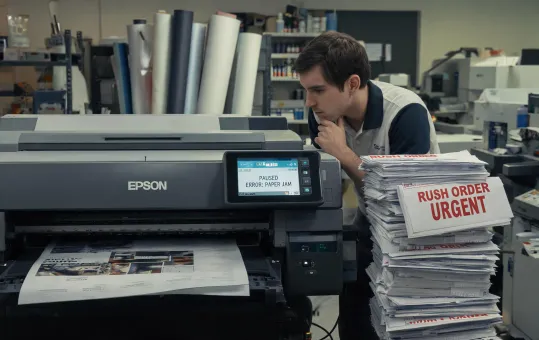
Unplanned Epson printroom downtime before service plan

Before - reactive maintenance

Operators wait for symptoms to become stoppages. Ink, film, media, and printhead issues are discussed separately, leaving supervisors without one accountable plan for production recovery.

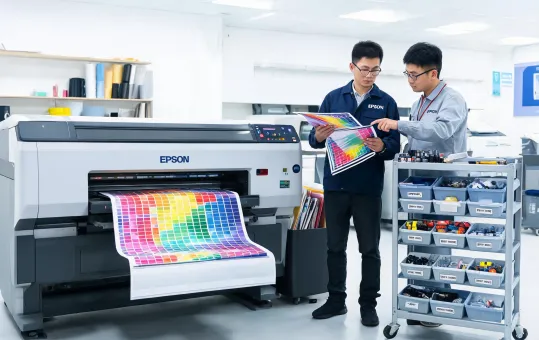
Epson printroom after service planning with operators checking output

After - planned uptime

Consumables, diagnostics, training, and escalation become one operating rhythm. The line knows who to call, what to check, what parts are local, and when to schedule preventive work.

Tell us about your Epson print application

Send substrate, weekly volume, color expectations, current bottleneck, and preferred service window. We will respond with a two-tier recommendation, one conservative and one growth-ready, so finance and production can compare the tradeoffs without waiting for a sales cycle.

  • Engineer reply within two working days
  • Parts and consumables lane check included
  • Training plan mapped to operator roles